
Why Vatican II Cannot Be Catholic
An objective examination of why Vatican II departs from historic Catholic doctrine, tradition, and authority and why arguably, it cannot be Catholic.
CHURCH TEACHINGS
1/5/20266 min read
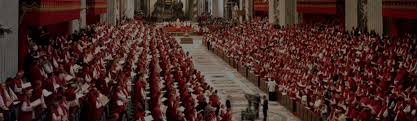
A Brief Theological Demonstration from the Church’s Own Teaching
This article is written for Catholics of good will who sense that something is gravely wrong in the post–Vatican II Church, yet hesitate to draw definitive conclusions. It does not appeal to emotion, personalities, or nostalgia. It proceeds from Catholic dogma itself, using the Church’s own authoritative teaching to demonstrate—step by step—why Vatican II and the Novus Ordo religion cannot be Catholic, and why the faithful are bound in conscience to reject them.
I. The Fundamental Catholic Principle: The Church Cannot Teach Error
The Catholic Church is not merely assisted by the Holy Ghost in extraordinary moments. She is
divinely protected from error in her teaching office as such. Vatican I teaches that the
“See of St. Peter always remains untainted by any error, according to the divine promise of our Lord and Savior made to the prince of His disciples.” (Paster Aeternus, ch. 4 1870). “The Church, founded on the rock, will stand firm forever. She has never been able, nor ever will be able, to fall away from the truth." (Quartus Supra, 1873)
This protection applies not only to solemn definitions (ex cathedra), but also to the ordinary and universal Magisterium. In 1863, the Holy Office taught with Pius IX’s approval that “The faithful are bound to submit to the ordinary teaching of the Church, even when not defining, since it is infallibly safe.”
Vatican I (1870): Ordinary Magisterium Binds Under Pain of Salvation
The First Vatican Council infallibly teaches:
“All those things are to be believed with divine and Catholic faith which are contained in the word of God, written or handed down, and which the Church, either by a solemn judgment or by her ordinary and universal Magisterium, proposes for belief as having been divinely revealed.” (Vatican I, Dei Filius, ch. 3)
And further:
“Wherefore, by divine and Catholic faith all those things are to be believed which are contained in the word of God… and are proposed by the Church… whether by solemn judgment or by her ordinary and universal Magisterium.”
This is not optional. Vatican I explicitly condemns the idea that Catholics may limit obedience only to ex cathedra definitions.
All the Popes have shared in teaching this reality and even condemned groups who disagree.
Condemnation of Selective Obedience (Old Catholic Error)
After Vatican I, a group of men calling themselves "Old Catholics" rejected the true notion that "religious submission of mind and will must be shown in a special way to the authentic magisterium of the Roman Pontiff, even when he does not speak ex cathedra.” (Vatican I) The "Old Catholics" claimed they were bound only by explicit ex cathedra definitions. The Church condemned them for this position stating that “[t]hese men, while professing to accept the Catholic faith, refuse obedience to the legitimate authority of the Church, and reject the disciplinary laws and teachings issued by the Apostolic See which are not declared infallibly.” (Pius IX, Quae in patriarchatu, 1876)
Pope Leo XIII taught:
“It is not enough to accept only those doctrines which have been solemnly defined; one must also submit to the teaching of the Church in those matters which are taught by the ordinary Magisterium.”
Pius IX warned likewise:
“They are not to be listened to who say that the Church’s judgment should be obeyed only when she defines dogmas by solemn decree.”
To claim today that Vatican II may be safely ignored because it was not infallible repeats the exact error of the Old Catholics, already condemned by the Church. In fact the error would be worse than the condemned notions above because Vatican II was an ecumenical council (a fake one of course, since an authentic council would be protected from error)
II. The Church Is Infallibly Safe — She Cannot Universally Harm Souls
Beyond doctrinal definitions, Catholic theology teaches that the Church is indefectible in her universal discipline, liturgy, and laws.
Pope Pius VI condemned the proposition that the Church could establish harmful disciplines:
“If anyone says that the Church can establish a discipline that is dangerous, harmful, or leading to superstition, let him be anathema.”
— Auctorem Fidei (1794)
This means:
• A universally promulgated Mass cannot be spiritually harmful
• A universal catechetical system cannot teach error
• A universal sacramental rite cannot be doubtful
The Novus Ordo Mass is deficient, Protestantized, and harmful to faith—as even its architects admitted— it cannot come from the Catholic Church. (See: The Ottaviani Intervention)
III. Vatican II Explicitly Claimed Ecumenical Authority
It is historically false to claim that Vatican II was merely “pastoral” and did not intend to bind consciences as the other councils do.
Paul VI: Vatican II "Engages" the Supreme Magisterium
Anti-pope Paul VI stated unequivocally:
“The Council has avoided issuing solemn dogmatic definitions, but it has nevertheless endowed its teachings with the authority of the supreme ordinary Magisterium, which ordinary Magisterium is to be accepted with docility and sincerity.”
— General Audience, January 12, 1966
And again:
“One must obey the Council with the obedience due to the Magisterium.”
But this truth does not rest on these quotations alone for there is no category in Catholic theology for a “non-binding ecumenical council.”
The idea then that the Catholic Church can have an ecumenical council that we can entirely disregard, or disregard what we choose, is rubbish.
This can also be seen since other councils exist in which it is not explicitly stated that the church is "decreeing, defining, or declaring" yet one would never dare to question even an iota of such councils as:
Council of Nicaea I (325)
Council of Constantinople I (381)
Council of Ephesus (431)
Council of Chalcedon (451)
Second Council of Nicaea (787)
Lateran IV (1215)
Thus, if Vatican II is an authentic Catholic Council is would be impossible for it to teach heresy and thus would demand absolute submission.
This places the faithful before an unavoidable dilemma:
• Either treat Vatican II as Catholic, which constitutes a defection of the Catholic Church (and can only be done by denying dogma) Or treat Vatican II for what it is: not Catholic, since Catholic councils are protected from containing errors.
There is no other Catholic position to take.
IV. Vatican II Teaches What the Church Previously Condemned
This is the decisive point, that Vatican II teaches doctrines that are condemned. For brevity sake let us consider just some of its teachings religious liberty and ecumenism.
Vatican II teaches:
“The human person has a right to religious freedom.” (Dignitatis Humanae)
In 1864 Pope Pius IX had already taught that the exact statement was "a doctrine most opposed to the Catholic Church." (Pius IX, Quanta Cura)
Vatican II teaches that non-Catholic sects are “means of salvation” while the Catholic Church explicitly condemns this idea.
Vatican II teaches that "[t]hose who have not yet received the Gospel are related in various ways to the People of God." (Lumen Gentium §16, 1964)
Vatican II teaches that in Buddhism men "may be able either to acquire the state of perfect liberation, or attain, by their own efforts or through higher help, supreme illumination.” (Nostra Aetate §2, 1965)
Vatican II teaches that the Muslims are "included in the plan of salvation" (Lumen Gentium)
Vatican II teaches that "Jews should not be presented as rejected or accursed by God, as if this followed from the Holy Scriptures.” (Nostra Aetate, §4)
And the list goes on and on... and what does the Catholic church teach? The exact opposite.
The Council of Florence teaches that "The Holy Roman Church firmly believes, professes, and teaches that all those who are outside the Catholic Church, not only pagans but also Jews, heretics, and schismatics, cannot share in eternal life and will go into the eternal fire which was prepared for the devil and his angels, unless before the end of life the same have been added to the flock; and that the unity of the ecclesiastical body is of such importance that only those remaining within this unity can profit by the sacraments of the Church unto salvation, and they alone can receive an eternal recompense for their fasts, their almsgiving, their other works of Christian piety, and the duties of a Christian soldier.
No one, whatever almsgiving he has practiced, even if he has shed blood for the name of Christ, can be saved, unless he has remained within the bosom and unity of the Catholic Church.” (Council of Florence, Cantate Domino,1442)
There is no reconciliation possible between these teachings, Catholics "firmly believe and confess that there is one true Church, outside of which no one at all is saved.” (Fourth Lateran Council (1215), Firmiter credimus)
V. The False Concept of Obedience in the Novus Ordo System
The Novus Ordo then demands obedience against Catholic doctrine.
But Catholic obedience is only due to legitimate Catholic Authority. If the men (Roncali, Montini, and there counterparts) really possessed the keys to the kingdom of heaven they could not have taught through their "magisterium" doctrines that call on Catholics to disobey the Catholic church. Catholic teaching holds that authority in the Church is inseparable from fidelity to the faith. As St Robert Bellarmine explains:
“No one can be a true bishop or Pope if he publicly and pertinaciously holds heresy. A heretic, even if elected, loses all ecclesiastical office and cannot bind the faithful.”
(De Romano Pontifice, bk. III, ch. 31)
Those who assert that heretics can remain pastors of the Church and retain authority over the faithful are in grave error as Pope Paul IV taught in Cum ex Apostolatus Officio:
"Heresy is incompatible with ecclesiastical office"
VI. The Only Catholic Conclusion
Because:
• The Church cannot teach error
• Obedience to the Magisterium binds under pain of salvation
• The Church cannot impose harmful rites or disciplines
• Vatican II claimed magisterial authority
• Vatican II contradicts prior infallible teaching
Then the conclusion follows with absolute theological certainty:
Vatican II and the Novus Ordo religion cannot be Catholic.
To remain Catholic today is not to remain within a structure that teaches error, but to remain faithful to what the Church has always taught.
As St. Paul warns:
“Though we, or an angel from heaven, preach a gospel contrary to that which we have preached, let him be anathema.” — Galatians 1:8
The Catholic Church has not defected. Men have.
Fidelity requires separation from error—not unity with it.
This is nothing more than consistent Catholicism.
Contact
Phone
info@mostholytrinity.org
© 2026. All rights reserved.