What is the Catholic doctrine about capital punishment or the death penalty?
The Catholic Church has consistently taught and maintained that the death penalty, like self-defense and just war, constitutes an exception to the "thou shalt not kill" prohibition of the Fifth Commandment of the Law of God.
Actually, what has the Catholic Church said about capital punishment?
The Catholic Church has consistently taught and maintained that the death penalty, like self-defence and just war, constitutes an exception to the "thou shalt not kill" prohibition of the Fifth Commandment of the Law of God.
Pope Saint Innocent I, consulted by Exuperius, bishop of Toulouse, wrote:
“It is important to remember that the power was granted by God, and that to avenge the crime the use of the sword was allowed; He who carries out this revenge is a minister of God (Rom. XIII, 1-4). What reason do we have to condemn a practice that everyone considers permitted by God? Therefore, we maintain what has been observed until now, so as not to disturb the discipline and so as not to appear to be acting against divine authority” (Migne, Latin Patrology 20, col. 495).
On April 24, Leo XIV Riggitano-Prévost sent a video message to the participants of the event commemorating the abolition of the death penalty in the state of Illinois at DePaul University in Chicago.
In this video message, Leó says that: "the death penalty is inadmissible because it violates the inviolability and dignity of the person." In addition, he makes a "condemnation" of the capital punishment or death penalty.
Saint Thomas Aquinas, in his Summa Against the Gentiles, says:
“Men who have authority over others do nothing wrong when they reward good and punish evil.”
For those who refuse to obey God's laws, it is right for society to rebuke them with civil and criminal penalties. No one sins by working for justice, within the framework of the law. To preserve concord among men it is necessary that the wicked be punished. Therefore, punishing the wicked is not evil in itself.
Furthermore, the common good is superior to the particular interest of a person. Therefore, private interest must be eliminated to preserve the common good. However, the life of certain harmful individuals constitutes an obstacle to the common good, which is the harmony of human society. Consequently, certain individuals must be eliminated from society through death.
Furthermore, just as a doctor seeks health as an end in his work, and health consists in the harmony of the humors, in the same way, the ruler of a state seeks peace in his work, and peace consists in the harmony of the citizens. Now, the doctor rightly and beneficially removes a diseased organ if it threatens the health of the body. Therefore, the ruler of a state executes men who cause disease, justly and without guilt, so that the peace of the state may not be disturbed.
The unjust execution of men is prohibited... Killing out of anger is prohibited... It is prohibited to execute the wicked wherever it cannot be done without danger to the good" (Suma contra los gentiles, third book, chapter CXLVI, 2-5).
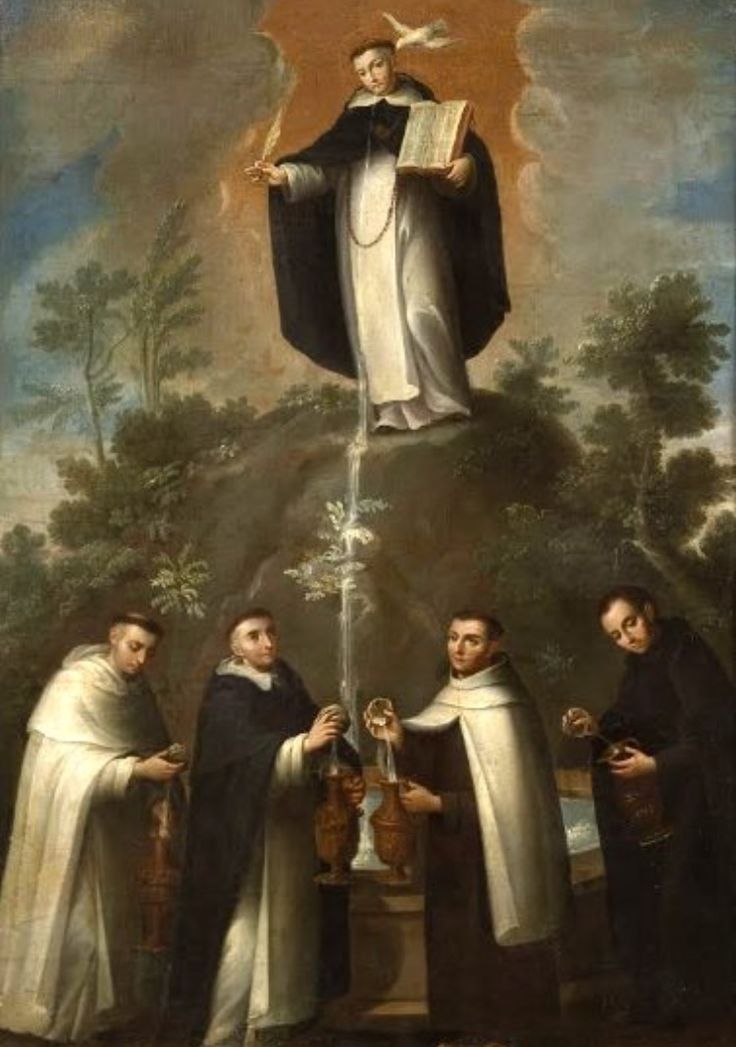
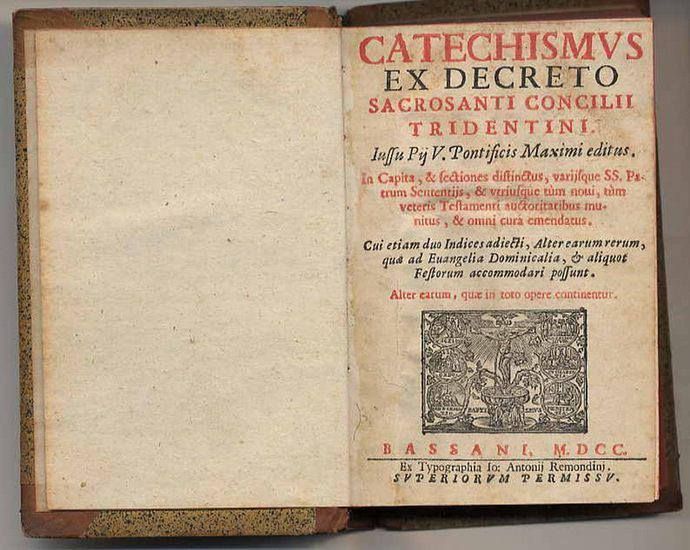
The Catechism of the Council of Trent, in explaining the fifth commandment of the Law of God, teaches:
“There is another type of murder that is also permitted, they are homicides ordered by magistrates who have the right to life and death to punish the criminals that the courts condemn, and to protect the innocent. Therefore, when they carry out their duties fairly, they are not only not guilty of murder, but, on the contrary, they very faithfully observe the Law of God that prohibits it. The purpose of this law is, in effect, to ensure the preservation of human life; Consequently, the punishments inflicted by magistrates, who are the legitimate avengers of crime, tend only to put our lives in security, repressing audacity and injustice with torture. This is what made David say: “Early in the morning I sought to exterminate all sinners, to eradicate from the city of God the workers of iniquity” (Psalm 100, 8)» (Catechism of the Council of Trent, 3204).
Pope St. Innocent I
St. Thomas Aquainas
Saint Pius X summarizes the above in this way:
“It is legal to kill when fighting a just war; when, by order of the Supreme Authority, a death sentence is carried out as punishment for a crime; and, finally, in cases of necessary and licit defense of one's life against an unjust aggressor" (Catechism of Saint Pius X).
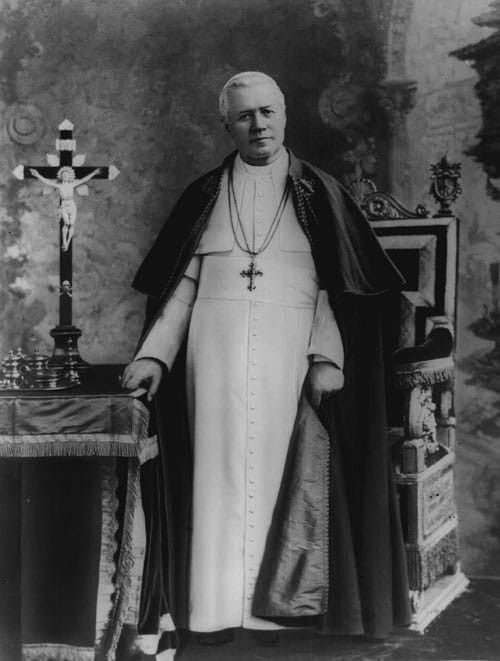
Pope St. Pius X
More recently, Pius XII, in his speech to the participants of the First International Congress of Histopathology of the Nervous System (September 14, 1952), clearly stated that
“Even in the case of the execution of a person sentenced to death, the State does not dispose of the individual's right to life. Then it is reserved to the public power to deprive the condemned of the “good” of life, in expiation of his fault, after, by his crime, he has deprived himself of his “right” to life” (Acta Apostólicæ Sedis XLIV, page 787).
Saint Augustine of Hippo, Doctor of the Church and founder of the Order to which Leo belongs, says the following:
“There are some exceptions, however, to the prohibition of not killing, indicated by divine authority itself. These exceptions include both a law promulgated by God to kill and the express order temporarily given to a person. But, in this case, the one who kills is not the person who provides services to the authority; It is like the sword, an instrument in the hands of the one who wields it. Hence, the men who, moved by God, have carried out wars, or those who, invested with public authority, and abiding by their law, that is, according to the dominion of the most just reason, have put to death those convicted of crimes, have by no means broken the precept that you shall not kill” (The City of God, book one, chapter XXI).
“Some great and holy men, who knew very well that this death that separates the soul from the body is not to be feared; However, according to the opinion of those who fear it, they punished some sins with the death penalty, either to instill healthy fear in the living, or because death would not harm those who were punished with it, but rather the sin that could be aggravated if they lived. Those to whom God himself had granted such judgment did not judge inconsiderately. It depends on this that Elijah killed many, either with his own hand or with fire, the fruit of divine impetration; which many other excellent and holy men also did, not inconsiderately, but with the best spirit, to attend to human things" (On the Sermon on the Mount, first book, chapter XX, 64).
Our Lord himself confirms this power of capital punishment in the interview with Pilate before his Crucifixion:
"So Pilate said to him: 'Are you not speaking to me? Don't you know that it is in my power to crucify you, and in my power to release you?' Jesus answered:
“You would have no power over me, IF IT WERE NOT GIVEN TO YOU FROM ABOVE…” (John 19, 10-11)
He also seems to talk about the appropriateness of capital punishment in another passage:
"But whoever scandalizes one of these little ones who believe in me, it would be better for him if one of those millstones that move a donkey were hung around his neck, and thus he were submerged in the depths of the sea" (Matthew 18, 6 / Bible of Mons. Félix Torres Amat).
The principle is also represented in the words of Saint Dismas, the Good Thief on the cross next to Christ, who was crucified for theft (the English versions Douay-Rheims and the Confraternity of Christian Doctrine – as well as those of Bishop Félix Torres Amat and that of Bishop Felipe Scío de San Miguel in Spanish – translate the Greek “kakoúrgōn” (κακούργων) in Luke 23:39 as “thieves”, but it is really more general than that; “evildoers” would be the literal translation or, more generally, “criminals”). He tells his criminal colleague on the other side of Christ:
“How, even you do not fear God, being as you are in the same torture? AND WE IN TRUTH ARE JUST IN IT, BECAUSE WE PAY THE PENALTY DESERVED FOR OUR CRIMES; but this man has done no evil” (Luke 23, 40-41).
The teaching of the Catholic Church from the earliest centuries, as represented, for example, in the writings of Saint Augustine, Saint Thomas Aquinas (Summa Theologica, part II-IIæ, Question 64, Article 2), and Saint Alphonsus Liguori (all Doctors of the Church), as well as in the Encyclical Casti Connúbii of Pope Pius XI to a criminal, for the need for the common good:
1. Firstly, to vindicate the moral order and atone for the crime,
2. secondly, to defend itself,
3. to deter other potential offenders, and
4. to reform the criminal or prevent future crimes.
Saint Thomas Aquinas equates a dangerous criminal with an infected member, making it "laudable and healthy" to kill the criminal in order to prevent the spread of infection and safeguard the common good. True Catholics cannot go wrong by following the Universal Doctor and Chief Theologian of the Church.
It should not be forgotten that the death penalty, like any criminal penalty, serves as a form of atonement. That is why prisons are called "penitentiaries".
As Saint Thomas observes in the Summa Theologica:
"Mors illáta, étiam pro crimínibus, áufert totam pœnam pro crimínibus debítam in ália vita, vel partem pœnæ, secúndum quantitátem culpæ, patiéntiæ et contritionis, non autem mors naturális"
“Death inflicted as punishment for crimes It erases all the punishment due to them in the afterlife, or at least part of the punishment in proportion to the guilt, suffering and contrition. Natural death, however, does not erase it”.
Furthermore, in the case of capital punishment, the expiatory penalty reflects the sin of the one whose serious crime has caused him to lose the right to life.
According to Catholic Moral Theology, an execution can take place if the following conditions are met:
1. the prisoner's guilt is certain;
2. the crime is of greater severity;
3. the penalty is inflicted after due process by the authority of the state, not by private individuals or by lynching, and
4. The prisoner has been given the opportunity to make peace with God.
Given these criteria, Catholics may differ in their prudential judgments about whether a particular society needs to employ capital punishment for its own protection. To say that it is wrong "per se" or without any justification is contrary to the traditional teaching of the Church. A Catholic cannot add his prudential judgments to the list of Church doctrines and prescribe them as obligatory. However, the State can always decide to commute the sentence deserved.
It should be noted that heinous criminals are not innocent people (like unborn children), but under natural law they are objectively guilty of serious crimes against the common good. As Pope Pius XII explained:
“Even in the case of the execution of a person sentenced to death, the State does not have the individual's “right” to life. Then it is reserved to the public power to deprive the condemned of the "good" of life, in expiation of his fault, after, by his crime, he has deprived himself of his "right" to life.”
Everything stated in this article refutes the opinions of Prévost, Bergoglio and many other modernists.
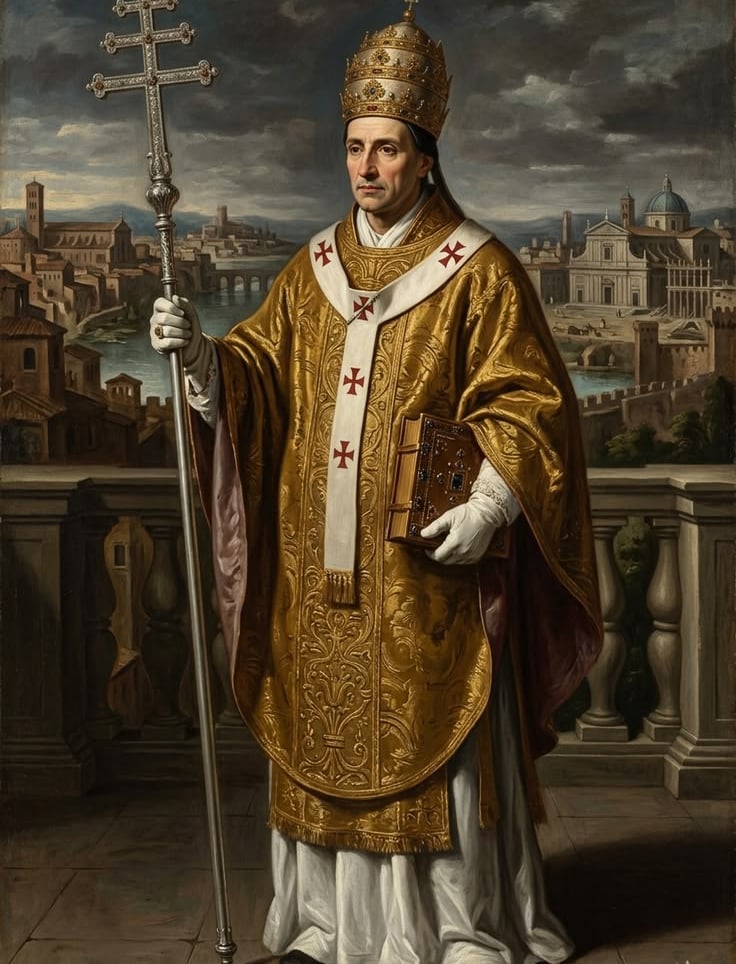
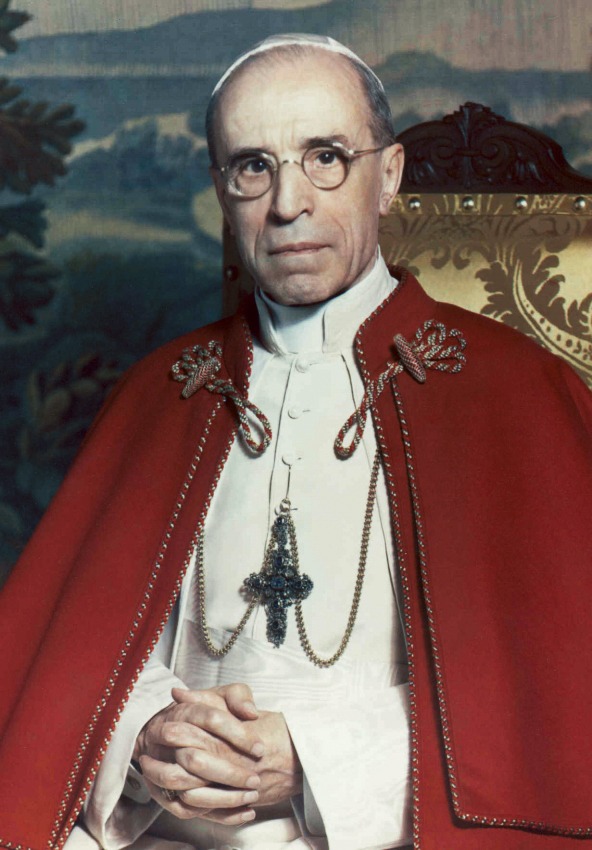
Pius XII with tabard, by Michael Pitcairn, 1951 (retouched)
Contact
Phone
info@mostholytrinity.org
© 2026. All rights reserved.