
SAINT MARCELLUS, POPE AND MARTYR
Taken From THE LITURGICAL YEAR, Dom Guéranger OSB, | Christmas Vol 3
The name of Marcellus is brought before us by the Calendar to-day: he was a successor of the glorious Hyginus in the papacy, and in martyrdom, and their Feasts fall in the same season of the year. Each Christmastide shows us these two Pontiffs offering their Keys in homage to our Jesus, the invisible Head of the Church they governed. In a few days hence, we shall find our Christmas list of Saints giving us the name of a third Pope and Martyr—Fabian.
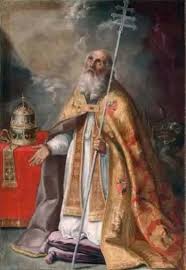
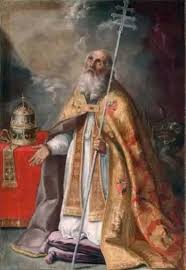
These three valiant Vicars of Christ are like the three generous Magi—they offered their richest presents to the Emmanuel, their blood and their lives.
Marcellus governed the Church at the close of the last general persecution. A few months after his death, the tyrant Maxentius was vanquished by Constantine, and the Cross of Christ glittered in triumph on the Labarum of the Roman Legions. The time for Martyrdom was, therefore, very short; but Marcellus was in time: he shed his blood for Christ, and won the honour of standing in St. Peter’s company over the Crib of the Divine Infant, waving his palm-branch in his venerable hand. He witnessed the destruction of Rome, when barbarism subdued the majesty of the empire; Pontificate, and his city. Rome was to be the capital of another King—of Christ—who, in the person of his Vicar, would take possession of it, and reign in it.
There is three hundred years since the decree of Caesar Augustus ordered the census of the world to be taken, which brought Mary to Bethlehem, and where she gave birth to an humble Babe; and now, the Empire of that Babe has out-grown the Empire of the Caesars, and its victory is proven by the point of being proclaimed. After Marcellus, we shall have Eusebius; after Eusebius, Melchiades; and Melchiades will see the triumph of the Church.
The Acts of Marcellus are thus given in the Lessons of his Feast.
Marcellus, Roman, son of Claudius and Marcellina, governed the Church from the reign of Constantius and Galerius to that of Maxentius.
He was appointed Bishop of Rome. He found the Church disturbed by divisions arising from the long persecution. He established in Rome twenty-five parishes, and appointed priests over each of them. He ordered that Christians should confess their sins and do penance before being admitted to the Holy Communion.
Maxentius, irritated by the firmness of Marcellus, had him arrested, and condemned him to tend the stables belonging to the imperial post. There, exposed to hunger, cold, and filth, he spent his days in prayer and fasting. A noble matron named Lucina secretly aided him, and afterward gave up her house, which was converted into a church, and called the Church of St. Marcellus.
But Maxentius, enraged at seeing the people resort to this house, turned it into a stable again, and shut up the Saint there, where he soon died from the sufferings he endured. He was buried in the cemetery of Priscilla, on the Salarian Way, the seventeenth of January, in the year three hundred and nine.
O glorious Marcellus, who didst suffer for the Faith in a stable, chained and ill-treated, obtain for us the grace to bear with patience the humiliations of life. Teach us to love the Crib of our Saviour, and to learn from it humility and obedience. Pray that we may imitate Jesus, conquer pride, love the Cross, and be faithful in all our trials.
“St. Matth. ii. 24.”
Related Articles: Saints Page
Contact
Phone
info@mostholytrinity.org
© 2026. All rights reserved.