
SAINT HILARY, BISHOP, CONFESSOR, AND DOCTOR OF THE CHURCH
Taken From THE LITURGICAL YEAR, Dom Guéranger OSB, | Christmas Vol 2
AFTER having consecrated the joyous Octave of the Epiphany to the glory of the Emmanuel who was manifested to the earth, the Church-incessantly occupied with the Divine Child and his august Mother, during the whole time from Christmas Day to that whereon Mary will bring Jesus to the Temple, there to be offered to God, as the law prescribes the Church, we say, has on her Calendar of this portion of the year the names of many glorious Saints, who shine like so many stars on the path which leads us, from the joys of the Nativity of our Lord, to the sacred mystery of our Lady's Purification.
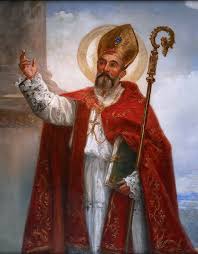
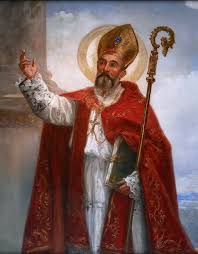
And firstly, there comes before us, on the very morrow of the day consecrated to the Baptism of Jesus, the faithful and courageous Hilary-the pride of the Churches of Gaul, and the worthy associate of Athanasius and Eusebius of Vercelli in the battle fought for the Divinity of our Emmanuel.
Scarcely were the cruel persecutions of paganism over, hen there commenced the fierce contest with Arianism, which had sworn to deprive of the glory and honours of his divinity that Jesus, who had conquered, by his Martyrs, over the violence and craft of the Roman Emperors. The Church had won her liberty by shedding her blood, and it was not likely that she would be less courageous on the new battlefield into which she was driven. Many were the Martyrs that were put to death by her new enemies christian, though heretical, Princes:-it was for the Divinity of that Lord, who had mercifully appeared on the earth in the weakness of human flesh, that they shed their blood. Side by side with these, there stood those holy and illustrious Doctors, who, with the martyr-spirit within them, defended, by their learning and eloquence, the Nicene Faith, which was the Faith of the Apostles. In the foremost rank of these latter we behold the Saint of to-day, covered with the rich laurels of his brave confessorship, Hilary:-who, as St. Jerome says of him, was brought up in the pompous school of Gaul, yet had culled the
flowers of Grecian science, and became the Rhone of Latin eloquence. St. Augustine calls him the illustrious Doctor of the Churches.
Though gifted with the most extraordinary talents, and one of the most learned men of the age, yet St. Hilary's greatest glory is his intense love for theIncarnate Word, and his zeal for the Liberty of the Church. His great soul thirsted after martyrdom, and, by the unfinching love of truth which such a spirit gave him, he was the brave champion of the Church in that trying period, when Faith, that had stood the brunt of persecution, seemed to be on the point of being betrayed by the craft of Princes, and the cowardice of temporising and un-orthodox Pastors. Let us listen to the short Life of our Saint, contained in the Lessons of his Office.
The Short Life of St. Hilary (as given in the Lessons of his Office)
Hilary was born of a noble family in Aquitaine, and was distinguished for his learning and eloquence. He was married, but the life he led was almost that of a monk, so that, later on, on account of his great virtues, he was made Bishop of Poitiers, and so well did he discharge the episcopal office, as to be the object of the deepest veneration on the part of the faithful.
At that time, the Emperor Constantius was inflicting every sort of harsh treatment, intimidation, confiscation of their property, and banishment, on the Catholics who refused to side with the Arians. Hilary set himself as a bulwark against the Arians, thereby bringing on himself all their fury.
On this account, they many times sought to ensnare him, and at length, by the treachery of Saturninus, the Bishop of Arles, he was banished from the Council at Beziers into Phrygia. There he raised a dead man to life, and wrote his twelve books On the Trinity, against the Arians.
Four years after, a Council was called at Seleucia, a town in Isauria, at which Hilary was compelled to assist. Thence he set out for Constantinople, where, seeing the extreme dangers to which the true faith had been exposed, he petitioned the Emperor, by three public petitions, to grant him an audience, in order that he might obtain permission to hold a controversy with his adversaries concerning matters of faith.
But Ursacius and Valens, two Arian Bishops, whom Hilary ad refuted in his writings, were afraid of allowing so learned a man tocontinue there any longer, and persuaded Constantius to restore him to his episcopal see, under the pretence of showing him honour.
Then did the Church of Gaul open her arms, as St. Jerome says, to receive Hilary on his return from battle with the heretics. St. Martin, who was afterwards Bishop of Tours, followed the holy Doctor to Poitiers; how much he profited by the instructions of such a master is evidenced by the sanctity of his after-life.
From that time, he was left in perfect peace in the government of the Church of Poitiers. He leu the whole of Gaul to condemn the Arian blasphemies.
He composed a great manyexceedinglylearned books, of which St. Jerome, in a letter to Læta, says, that they may be all read without the slightest fear of meeting any false doctrine in them; he assures her, that she may run through the books of Hilary without stumbling on anything dangerous.
He passed from this earth to heaven on the Ides of January (January 13th), during the reign of the Emperors Valentinian and Valens, in the year of our Lord 369.
Hilary was called by several Fathers and Councils, an illustrious Doctor of the Church, and was publicly honoured as such in certain dioceses. At length. at the petition of the Council of Bordeaux, the Supreme Pontiff, Pius the Ninth, after having consulted the congre- gation of sacred Rites, declared him to have been justly called, and to be in effect, a Doctor of the universal Church; and ordered, that on his Feast, all should recite the Mass and Office Of Doctors.
The Ancient Gallican Liturgy: An Allocution in Praise of St. Hilary
The ancient Gallican Liturgy, of which a few precious remnants have been handed down to us, thus celebrated the praise of the most illustrious of the Bishops of that great country. Our first extract is an Allocution addressed to the Faithful, taken from an ancient Sacramentary.
ALLOCUTION.
On the recurrence, Brethren, of this solemn Feast of the most blessed Bishop Hilary, whose tongue, during his mortal life, so thundered forth the truth concerning the equality of the Three Divine Persons, that he, the soldier of Christ, threw down the Prince of this world, and entered a conqueror into the palace of the heavenly King-let us, with more than our wonted fervour, beseech the adorable God, that He, who made Hilary so vigilant in all his combats as to give security in the battle, may mercifully grant to us, that what we ask in his honour, may be granted to us by his intercession.
The Church of Poitiers and the Preface of the Blessed Trinity
This Preface, which extols the virtues and the miracles of St. Hilary, was sung in the Church of Gaul, even after the introduction of the Roman Liturgy.
The Church of Poitiers has ever cherished, with the utmost devotion, the memory of her heroic Pon- tiff, and his Feast, as we may suppose, is kept there with the utmost solemnity. She sings in the Mass of this day, the Preface of the Blessed Trinity, to express more forcibly her admiration of the zeal, wherewith Hilary defended the master-dogma of our holy faith-the mystery of Three Persons in one God.
It will be interesting to our readers to hear a few passages froin the ancient liturgical books of this illustrious Church of Poitiers. The following Responsories are taken, in part, from the Life of the Saint, and were composed by St. Venantius Fortunatus, one of St. Hilary's successors.
The Church’s Love, and the Principle of Ecclesiastical Liberty
Thus did the holy bishop, Hilary of Poitiers, receive the honours of the Church's love for his having so courageously, and even at the peril of his life, fought in defence of the great Mystery. Another of his glories is, that he was one of the most intrepid champions of that principle, which cannot be com- promised without the vitality and very existence of the Church being endangered-the principle of that Church's Liberty.
A few days ago we were celebrating the Feast of our holy Martyr, St. Thomas of Canterbury; to-day, we have the Feast of the glorious Confessor, whose example enlightened and encouraged him in the great struggle.
Both Hilary and Thomas à Becket were obedient to the teaching left to the Pastors of the Church by the Apostles; who, when they were arraigned the first time before the authorities of this world, uttered this great maxim: We ought to obey God rather than men.¹
The Apostles and the Saints were strong in the battle against flesh and blood, only because they were detached from earthly goods, and were convinced, that the true riches of a Christian and a Bishop consist in the humility and poverty of the Crib, and that the only victorious power is in the imitation of the simplicity and the weakness of the Child that is born unto us.
They relished the lessons of the School of Bethlehem; hence, no promise of honours, of riches, or even of peace, could make them swerve from the principles of the Gospel.
How dignified is this family of Soldiers of Christ, which springs up in the Church! If the policy of tyrants, who insist on being Christians without Christianity, carry on a persecution, in which they are determined that no one shall have the glory of Martyrdom, these brave Champions raise their voice, and boldly reproach the persecutors for their interference with that Liberty, which is due to Christ and his Ministers.
Hilary’s First Memorial to Constantius
They begin by telling them their duty, as Hilary did Constantius, when he sent him his first Memorial:
"My Lord and most gracious Augustus! Your own great and admirable prudence "tells you, that it is not right, nor possible, violently " to compel, such as are unwilling and opposed to it, "to submit to, and take part with, them that are "sowing the corrupt seed of false doctrine. The one "end of your endeavours, wise counsels, government, 66 "and vigilance, should be, that all your subjects may enjoy the sweets of liberty. There is no other "means of settling the troubles of the state, or of uniting what discord has separated, than that every one be master of his own life, unconstrained by slavish compulsion. You should not turn a deaf ear to the voice of any subject, who thus appeals to you for support: 'I am a Catholic; I will not be a heretic: I am a Christian, and not an Arian : I 'would rather lose my life, than allow the tyranny 'of any man to corrupt the purity of my faith.'"
Against Auxentius: A Warning to Fellow Bishops
When some people spoke to Hilary in favour of those who had been traitors to the Church, and had been disloyal to Jesus Christ, in order to keep in the good graces of the Emperor, they ventured to tell the Saint, that their conduct was justifiable, on the ground that they had but obeyed the Law!
The holy Pontiff was indignant at this profanation of the word, and, in his Book against Auxentius, courageously reminds his fellow Bishops of the origin of the Church-how her very establishment depended on the breaking of unjust human Laws, and how she counts it one of her glories to infringe all such Laws as would oppose her existence, her development, and her action.
" 66 "We have a contempt for all the trouble that men of these days are giving themselves; and I am grieved to see them holding such mad opinions, as "that God needs man's patronage, and that the Church "of Christ requires to be upheld by an ambition, that "curries favour with the world. I ask of you Bishops, "what favour did the Apostles court, in order that "they might preach the Gospel? Who were the "princes that helped them to preach Christ, and "convert almost the whole world from idolatry to "God ? Did they, who sang hymns to God in prisons and chains, and whilst bleeding from being "scourged, did they accept offices from the state? "Did Paul wait for a royal permission to draw men "to the Church of Christ? Did he, think you, "cringe for the patronage of a Nero, or a Vespasian, 66 the or a Decius, whose very hatred of our faith was "occasion of its being more triumphantly preached? "These Apostles, who lived by the labour of their "own hands, who assembled the Faithful in garrets "and hiding-places, who visited villages and towns, "and well nigh the whole world, travelling over sea "and land, in spite of the Senate's decrees and Imperial Edicts-these men, according to your principles, had not received the keys of the kingdom of "heaven! What say you to all this manifestation "of God's power in the very face of man's opposition, "when, the more there was a prohibition to preach "Christ, the more that preaching was exercised ?"
The Time for Speaking: Hilary’s Apostolic Protest
But the time came, at last, to speak to the Emperor himself, and to protest against the system whereby he aimed at making the Church a slave; then did Hilary, who was exceedingly gentle in disposition, put on that holy indignation, which our Lord himself had, when he scourged the profaners of his Father's House, and drove them out of the Temple.
He braved every danger, and held up to execration the system invented by Constantius for insulting and crushing the Church of Christ. Let us listen to the language of his apostolic zeal «
"The time for speaking is come, for the time for silence is past. Let Christ now appear, for Antichrist has begun his reign. Let the Shepherds give "the alarm, for the hirelings have fled. Let us lay " down our lives for our sheep, for thieves have got "into the fold, and a furious lion is prowling around "it. Let us prepare for martyrdom, for the "angel of satan hath transformed himself into an "angel of light.
"Why, O my God, didst thou not permit me to "confess thy holy Name, and be the minister of "thine Only Begotten Son, in the times of Nero or "Decian? Full of the fire of the Holy Spirit, I would not have feared the rack, for I would have "thought on Isaias, how he was sawn in two. I would not have feared fire, for I would have said to "myself, that the Hebrew Children sang in their "fiery furnace. The cross and the breaking every "bone of my body should not have made me a coward, " for the good thief would have encouraged me, who "was translated into thy kingdom. If they had "threatened to drown me in the angry billows of the "deep ocean, I would have laughed at their threats, 6 for thou hast taught us, by the example of Jonas "and Paul, that thou canst give life to thy servants "even in the sea.
"Happy me, could I thus have fought with men, "who professed themselves to be the enemies of thy "name; every one would have said, that they who "had recourse to tortures, and sword, and fire, to compel a Christian to deny thee, were persecutors; and my death would have been sufficient testimony to thy truth, O God! The battle would have been an open one, and no one would have hesitated to call, by the honest name, these men that denied "thee, and racked and murdered us; and thy people, "seeing that it was an evident persecution, would have followed their Pastors in the confession of their faith.
"But, now-a-days, we have to do with a disguised "persecutor, a smooth-tongued enemy, a Constantius who has put on Antichrist; who scourges us, not with lashes, but with caresses; who instead of robbing us, which would give us spiritual life, bribes "us with riches, that he may lead us to eternal death; who thrusts us, not into the liberty of a prison, but "into the honours of his palace, that he may enslave us; who tears, not our flesh, but our hearts; who beheads not with a sword, but kills the soul with his gold; who sentences not by a herald that we are to be burnt, but covertly enkindles the fire of hell "against us.
He does not dispute with us, that he "may conquer; but he flatters us, that so he may lord it over our souls. He confesses Christ, the "better to deny Him; he tries to procure a unity which shall destroy peace; he puts down some few "heretics, so that he may also crush the Christians; he honours Bishops, that they may cease to be Bishops; he builds up Churches, that he may pull down the Faith..
"Let men talk as they will, and accuse me of "strong language, and calumny: it is the duty of a minister of the truth, to speak the truth. If what "I say be untrue, let me be branded with the name " of an infamous caluminator: but if I prove what I assert, then am I not exceeding the bounds of apostolic liberty, nor transgressing the humility of " a successor of the Apostles, by speaking thus, after "so long observing silence. No, this is not "rashness, it is faith; it is not inconsiderateness, it "is duty; it is not passion, it is conscience.
"I say to thee, Constantius, what I would have said "to Nero, or Decius, or Maximian: You are fighting against God, you are raging against the Church, "you are persecuting the saints, you are hating the "preachers , of Christ, you are destroying religion, you are a tyrant, not in human things, but in things "that appertain to God. Yes, this is what I should "say to thee as well as to them; but listen, now, to "what can only be said to thyself: Thou falsely "callest thyself a Christian, for thou art a new enemy "of Christ; thou art a precursor of Antichrist, and "doer of his mystery of iniquity; thou, that art a a "rebel to the faith, art making formulas of faith; "thou art intruding thine own creatures into the "sees of the Bishops; thou art putting out the good and putting in the bad. By a strange ingenious plan, which no one had ever yet discovered, "thou hast found a way to persecute, without making "Martyrs.
"We owe much to you, Nero, Decius, and Maximian! your cruelty did us service. We conquered the devil, by your persecutions. The blood "of the holy Martyrs you made, has been treasured "up throughout the world, and their venerable relics "are ever strengthening us in faith by their mute "ceaseless testimony. But thou, Constantius, cruel with thy refinement of cruelty, art an enemy "that ragest against us, doing us more injury, and "leaving us less hope of pardon. ** Thou de- ," priest the fallen of the excuse they might have had with their Eternal Judge, when they showed Him the scars and wounds they had endured for "him, for perhaps their tortures might induce him "to forgive their weakness. Whereas, thou, most wicked of men! thou hast invented a persecution, which, if we fall, robs us of pardon, and, if we triumph, does not make us Martyrs! ".
We see thee, ravenous wolf, under thy "sheep's clothing. Thou adornest the sanctuaries of "God's temples with the gold of the State, and thou "offerest to Him what is taken from the temples, or "taxed by edict, or extorted by penalty. Thou receivest his Priests with a kiss like that which "betrayed Christ. Thou bowest down thy head for "a blessing, and then thou usest it to trample on our Faith. Thou dispensest the clergy from paying "tributes and taxes to Cæsar, that thou mayest bribe "them to be renegades to Christ, foregoing thy own "rights, that God may be deprived of His!"
Closing Praise and Prayer
Glorious Hilary! thou didst well deserve that thy Church of Poitiers should, of old, address to thee the magnificent praise given by the Roman Church to thy illustrious disciple, St. Martin :
"O blessed "Pontiff! who with his whole heart loved Christ our "King, and feared not the majesty of emperors: O "most holy soul! which, though not taken away by "the sword of the persecutor, yet lost not the palm "of martyrdon!"
If the Palm of a Martyr is not in thy hand, yet hadst thou a Martyr's spirit, and well might we add to thy other titles, of Confessor, Bishop, and Doctor, the glorious one of Martyr, just as our holy Mother the Church has conferred it upon thy fellow-combatant, Eusebius, who was but Martyr in heart like thyself.
Yes, thy glory is great; but it is all due to thee for thy courage in confessing the Divinity of that Incarnate Word, whose Birth and Infancy we are now celebrating. Thou hadst to stand before a Herod, as had the Magi, and, like them, thou fearedst not: and when the Cæsar of those times banished thee to a foreign land, thy soul found comfort in the thought, that the Infant Jesus, too, was exiled into Egypt.
Oh! that we could imitate thee in the application of these Mysteries to ourselves! Now that thou art in heaven, pray for our Churches, that they may be firm in the Faith, and may study to know and love Jesus, our Emmanuel.
Pray for thy Church of Poitiers, which still loves thee with the reverence and affection of a child; but since the ardour of thy zeal embraced all the world, pray, also, for all the world.
Pray that God may bless his Church with Bishops powerful in word and work, profound in sacred science, faithful in the guardian-ship of that which is in trusted to them, and unswerving defenders of Ecclesiastical Liberty.
Related Articles: Saints Page
Contact
Phone
info@mostholytrinity.org
© 2026. All rights reserved.