
SAINT ANTONY, ABBOT
Taken From THE LITURGICAL YEAR, Dom Guéranger OSB, | Christmas Vol 3
The East and West unite, to-day, in honouring St. Antony, the Father of Cenobites. The Monastic Life existed before his time, as we know from indisputable testimony; but he was the first abbot, because he was the first to bring Monks under the permanent government of one Superior.
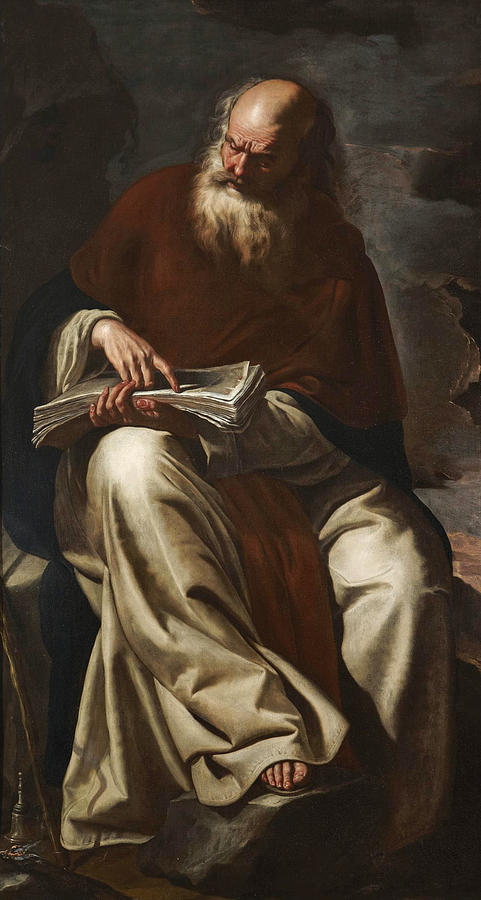
Antony began with seeking solely his own sanctification; he was known only by his wonderful solitude, again and again he withdrew from men almost entirely, but he was more attracted to him by his miracles and by the desire of their own perfection than by his Disciples. He permitted them to cluster round his cell; and Monasteries thus began to be built in the desert. The age of the Martyrs was near its close; the persecution under Diocletian, which was to be the last, was over. As Antony entered on the second half of his course, and God chose this time for organizing a new force in the Church, the Monastic Life was brought to bear upon the Christian world; the Ascetics, as they were called, not even such of them as were converts from paganism, were not sufficient elements of power. Monasteries were built in every direction, in solitude and in the very cities; and the Faithful had but to look at these communities living in the fervent and literal fulfilment of the Counsels of Christ, and they felt themselves encouraged to obey the Precepts.
The apostolic traditions of continual prayer and penance were perpetuated by the Monastic system; it secured the study of the Sacred Scriptures and Theology; and the Church herself would soon receive from these arsenals of intellect and piety her bravest defenders, her holiest Prelates, and her most zealous Apostles.
Yes, the Monastic Life was to be and give all this to the Christian world; for the example of St. Antony had given her a bias to usefulness. If there ever were a Monk of whom the charms of solitude and of asceticism could place one over dear, it was our Saint; and yet, they could not keep him in his desert, when he could save souls by a few words and possibly. Thus, we find him in the streets of Alexandria, when the pagan persecution was at its height; he came to encourage the Christians in their martyrdom. Later on, when the faith still suffered from Arianism, was it not the faith of the people we again meet the great Abbot in the same capital, this time preaching to its inhabitants, that the Word is consubstantial to the Father, proclaiming the Nicene faith, and keeping up the Catholic and orthodox teaching.
There is another incident in the life of St. Antony which tells in the same direction, inasmuch as it shows how an intense interest in the Church must ever be where the Monastic Spirit is. We are alluding to our Saint’s affection for the great St. Athanasius, who, on his part, reverenced the Patriarch of the Desert, visited him, promoted the Monastic Life to the utmost of his power, used to say that he considered the greatest hope of the Church to be in the good discipline of Monasticism, and wrote the Life of his dear St. Antony.
But, to whom is due the glory of the Monastic Institute, with which the destinies of the Church were, from that time forward, to be so closely connected, as that the period of her glory and power was to be when the monastic element flourished, and the days of her affliction were to be those of its decay? Who was it that put into the heart of Antony and his disciples the love of that poor and unknown, yet ever productive, life? It is Jesus, the humble Babe of Bethlehem.
To Him, then, wrapt in his swaddling-clothes, and yet the omnipotent God, be all the glory.
The Character and Office of his Feast
Antony was born in Egypt. His parents were noble and Christian; at an early age, having one day entered a Church, he heard these words of the Gospel read: If thou wilt be perfect, go and sell all that thou hast, and give to the poor. He took them as addressed to himself, sold his possessions, distributed the money among the poor, and henceforth led the life of an Ascetic. Being freed from these obstacles, he resolved on leading an austere life; he fasted, watched, laboured with his hands, dwelt in solitude, and subdued his body by severe mortifications.
Not being therefore, a solitary by caprice, but obeying a heavenly vocation, he consecrated himself to prayer and penance, and to the study of Sacred Scripture. So great was his aversion for the company of men, or conversation with heretics, especially the Arians, that he used to say that he ought not even to go near them. He laid open to God, when necessity obliged him to sleep, with so much fervour, that his body seemed to be wholly burned with love. He braved sea and land in behalf of the Church and the Faith; he neither did he take his food and drink until sunset, nor did he drink water when not thirsty. He very frequently went the whole night in prayer.
Antony became so illustrious by his sanctity that bishops, priests, and monks flocked to him; illustrious men sought his counsel. Satan feared him, and by failing and despair was often vanquished. Knowing this, he bestowed on his disciples the same arms against the devil.
The saint lived to the age of one hundred and five years. Having foreseen the time of his death, he exhorted his disciples to perseverance, charity, and humility; and at length, having reached the hundred and fifth year, he rendered his soul to God on the seventeenth day of January.
Prayer
We unite, great Saint, with the universal Church, in offering thee the homage of our affectionate veneration, and in praising our Emmanuel for the gifts he bestowed upon thee. How sublime a life was thine, and how rich in fruit were thy works! Verily, thou art the Father of a great people, and one of the most powerful auxiliaries of the Church of God.
We beseech thee, therefore, pray for the Monastic Order, that it may re-appear in all its ancient fervour; and pray for each member of the great Family. Preserve the body of the faithful in the path of obedience, humility, and perseverance; and beg for them the mercy and grace they so much need.
Watch over us, in the temptations which enemy of mankind lays in our way; pray for us, that we may be vigilant in the combat, prudent in avoiding dangerous occasions, courageous in enduring, and humble in our victories. The angel of darkness appeared to thee in a visible shape; but he hides himself and his plots from us. May the faith and fear of God be our defence, and may the light of faith penetrate into the depths of our souls.
May prayer be our refuge in every necessity, and penance our safe-guard against sin. But above all, pray that we may have that, which didst counsel above all — the love of Jesus — that Jesus, who, for love of us, deigned to be born into this world, that so he might merit for us the grace whereby we might triumph over temptations, and that so he might show us how we were to resist and fight.
Related Articles: Saints Page
Saint Anthony Abbot : Attributed to Paolo Domenico
Contact
Phone
info@mostholytrinity.org
© 2026. All rights reserved.